
Articles tagged with Security and Privacy

Virus, Worm, and Trojan Horse are terms used to describe different types of malicious software. If the word 'malicious" sounds bad, you're right, and you don't want any of these types of software on your computer. In this newsletter, I'll try to explain these bad types of software, how they work, and what you can do to protect yourself from them....keep reading

SSL is the abbreviation for Secure Socket Layers. SSL is a security function used on websites to encrypt sensitive information. Encryption is a way of scrambling a set of number and letters with a unique "key" that prevents them from being read by anyone without the key....keep reading

Ransomware is a particularly dangerous form of malicious software which uses extortion that holds the user's computer hostage. The most common form of ransomware scramble files on a computer (also referred to as encryption) and demands payment (the ransom) in order to unscramble the files and regain access to them....keep reading

CAPTCHA is an acronym for the phrase "Completely Automated Public Turing test to tell Computers and Humans Apart." If you've ever filled out a form on a website you've probably seen a place where you're required to enter some letters or numbers that appear in a picture. That's CAPTCHA, since only a human can read the characters....keep reading

"Phishing" is when someone sends you an electronic message disguised as a trustworthy, legitimate enterprise, in order to trick you into giving them your personal information. It's very easy to fall for this kind of scam if you don't know about it, because phishing scams are often very convincing and sound very important. However, with a bit...keep reading

Spyware is any software technology that collects information about the owner of that device without the owners knowledge or to otherwise gain control over the device. Spyware has been in existence for nearly as long as personal computers have existed. Various computer hacking groups and individuals create spyware who seek to gain...keep reading

A password locker is a software program or website that stores and remembers your passwords for you. You only need to remember one password to unlock the password locker, and you will have access to all your passwords for websites that you use....keep reading

Spoofing refers to the impersonation of a legitimate source of information by an imposter. Spoofing usually occurs for the purpose of fraudulent or illegal activity and appears most frequently as an email message that appears to be from a known source, but is actually from an imposter....keep reading

A catfisher is an individual who uses the Internet, and in particular, online dating websites to lure people into a scam romance. The general goal of a catfisher is financial gain by developing an online relationship with another...keep reading

The darknet is a term that refers to areas of the Internet that use encryption technology to guarantee users anonymity. The darknet is only accessible through the use of specialized technology and specific browsers such as TOR....keep reading

A data breach occurs when there is any unauthorized access to electronic information. A data breach can involve access to personal information, such as a patient's medical history, personally identifiable information, financial information and trade secrets. It doesn't matter what the data is; it's the fact that someone who...keep reading
The news about social networking has been all about Facebook allowing third-party applications to use personal data. Unfortunately, when anyone uses a free service there's got to be a catch right? Facebook and other free online services have never really kept it a secret that they use our data, but the privacy policies are something you probably have never read. Don't worry, you're not alone, most people just click on agree- or 'OK- and never read the terms....keep reading

Lately, some websites requiring passwords have added a new feature to assess your password strength. As you create your password, a field of text may appear on the screen telling you if your password is weak, adequate or strong....keep reading
Before there were smartphones and computers, encryption was used to create coded messages in a way that allowed only authorized people to read them. Encryption describes any method to create a coded message and computers use software programs to accomplish this. An encrypted message requires a "key"...keep reading

Authentication is how someone (often a website) verifies you are who you say you are, also known as your "identity." The basic idea goes back thousands of years -- any time a sentry said, "Halt! Who goes there?" he was taking the first step of authentication. Websites use...keep reading
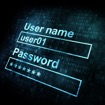
A username is an identity created by the user of an account or online service in order to distinguish him(her)self from other users. It can be the user's real name or a fictitious name that he creates. Other terms for username include sign-on name, screen name (screen name) and user nickname. The term originated in the late 1970s....keep reading
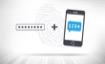
Two-factor authentication is a security method that requires two steps to verify a person's identity when using an an online login. Most electronic user accounts have used a single factor to when logging in. You're probably familiar with your...keep reading