
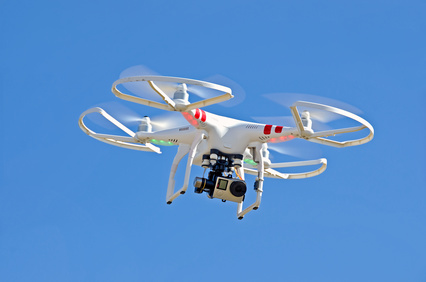
What is a Drone?
A drone is a robot that flies and is remotely controlled by an operator or flies using a programmed flight path. Drones are also known as unmanned aerial systems (UAS) or vehicles (UAV), and also called remotely piloted aerial systems (RPAS). Many drones come with cameras for aerial photography, and they can also add other attachments, such as sensors and weapons.
How to use a Drone
Drones come in a wide range of shapes and sizes and depending on how they are equipped with accessories and attachments, can perform different applications for commercial, military, and personal use. Unmanned operated drones are often remotely controlled or can fly themselves with internal automated software that works in alliance with GPS. Drone's function by hovering in the sky and can reach heights of up to 400 feet above ground, with access to locations that would be impossible for a person to enter. There are, however, safety regulations and guidelines provided by the Federal Aviation Administration (FAA) for the operation of drones (www.faa.gov/uas/).
Drone Registration and License
You don't need a license as long as you're flying for fun and not financial gain. You need to register any drop between 0.55 and 55 pounds with the Federal Aviation Administration. Effective December 12, 2017, all drone owners are required to register with the FAA. The registration costs $5 per aircraft and is valid for three years, and It takes about five minutes on the FAA website:
Different type of functions
The military uses unmanned vehicles (UAV), remote aircraft (RPAS), and aerial systems (UAS), all of which are also known as drones, for covert operations. Drones can enter areas unsafe for troops to enter. They provide the military with around the clock surveillance and real-time imagery that continue to advance with the latest in technology. The U.S. Air Force uses armed drones, equipped with radar and cameras.
Personal use of drones is also becoming more popular and often used for aerial photography. The reason you would use a drone for recreational activities could be to snap pictures or video from up top, or high places. Flying location is one area where safety is critical, and additional information about regulations are posted on the FAA's website (www.faa.gov/uas/). The FAA requires that you follow these rules to fly your drone responsibly.
Drones range from hobby to recreational use, and business. Certain organizations are looking to use drones for delivery services, and it's just like any other service that delivers packages. So, if you're looking to receive your mail faster, then keep an eye out for additional drone operations.
Agriculture is also a leading source for use. These drones are set to tell farmers how well their crops are doing and potentially provide a more accurate view from a drone's camera.
Hobby drones
Hobby drones range in price from approximately $230 to $400 and often include a camera. Apps on smartphones and remote control radios are two options. Hobby drones operate off a battery charge and may not fly for very long on a single charge. The current record holder for flipping time, according to Consumer Reports, is the Parrot Bebop 2 at 24 minutes.
One of the hazards of flying a drone is keeping it in sight, keeping it away from power lines, and being able to return to you before the battery charge drains. As a result, it's often recommended you practice flying a drone before depending on using it for shooting video. Hazardous crashes can occur since many drone operators are not able to fly well and hit objects, crash into power lines, or sometimes a drone loses communications with the controller and flies away.
If you use one, be sure to read the manual and practice flying in an area that's wide open and free from any overhead obstacles, The FAA says you can't fly above 400 feet and must keep the drone in sight at all times. Specific areas are off-limits according to FAA regulations, and a partial list includes stadiums, wildfires, prisons, power plants, government buildings, National Parks, and others so be sure to check on the FAA site for updates as well as any state or local regulations.
The FAA has an app B4UFLY that uses GPS information in your area to let you know of any restrictions, but you are responsible for understanding any additional regulations.
To my way of thinking
Drone's are sophisticated robots in the sky, and although they initially used in the military, personal use of drones is becoming more popular with prices that consumers can afford. You can use a drone for photography purposes, reaching high views. A drone isn't that expensive, compared to most other electronics, and can offer a new hobby or skill set if you're interested.