
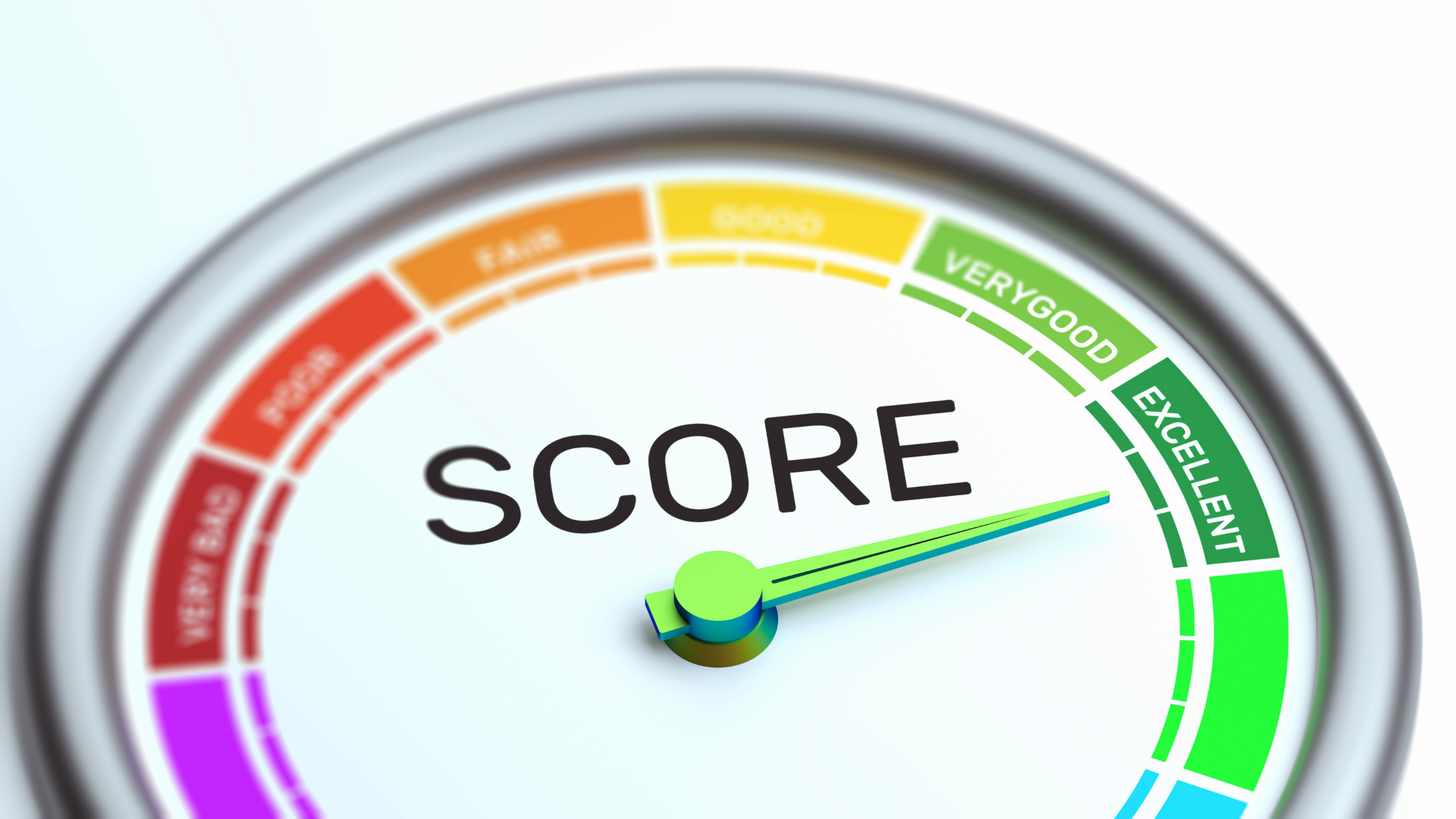
What is the Net Promoter Score(SM)? What Marketers and Consumers Should Know
Have you ever seen a customer survey question like this: "On a scale of 0 to 10, how likely are you to recommend our company/product/service to a friend or colleague?"
You've probably seen this question in customer feedback after you made a purchase or had a customer service call. It is called the Net Promoter Score. Businesses and organizations use it to gauge customers' perceptions of them and measure customer loyalty.
Some basics of Customer Loyalty
Understanding customer loyalty is crucial for success in today's competitive business landscape.
Think of a product or service you've recommended to someone, and you're already a "promoter" in marketing terms. I recently talked to a friend about getting my car's brakes checked, and he recommended the auto repair shop he uses without my asking. He is a promoter for that shop.
Or maybe you bought a product, like a coffee maker, which didn't really make you happy. If someone asked what coffee maker you use, you might say, "Don't buy brand XYZ; it's not that good." In marketing terms, you're a "detractor," and your opinion would hurt product sales.
A loyal customer who recommends the auto repair shop, like my friend, is precious to any business or organization since the customer not only has a high opinion but also creates good word-of-mouth marketing and can increase customer referrals.
Conversely, a lousy opinion can hurt a business or organization. Of course, some people have neither a positive nor negative opinion and are considered "passive" customers.
Because customer loyalty is critical to any business's success, someone devised a way to measure it with the Net Promoter Score (NPS). Developed by Fred Reichheld, Bain & Company, and Satmetrix Systems, the NPS is a simple yet effective metric that provides insights into customer satisfaction and brand advocacy. Net Promoter Score is a registered Service Mark of Bain & Company, but the scale of rating from 0-10 is widely used.
Let's learn more about this measurement tool and look at it from both a marketer's and a customer's point of view.
How NPS Measures Loyalty
Customers are asked this question for feedback:
"On a scale of 0 to 10, how likely are you to recommend our company/product/service to a friend or colleague?"
Their scores then result in their being placed into one of three categories.
- Promoters (9-10 are loyal enthusiasts who will keep buying and referring others, fueling growth.
- Passives (7-8) are satisfied but unenthusiastic customers vulnerable to competitive offerings.
- Detractors (0-6) are unhappy customers who can damage your brand and impede growth through negative word-of-mouth.
By subtracting the percentage of Detractors from the rate of Promoters, we get the Net Promoter Score. The score can range from -100 (all Detractors) to +100 (all Promoters), with a higher score indicating a healthier customer relationship.
Here's an example of what a survey might look like:
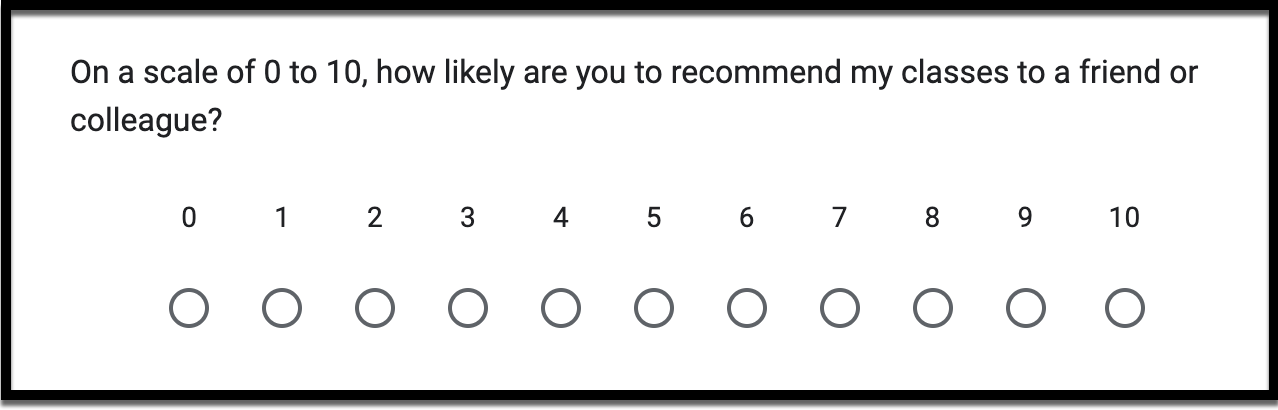
For example, I surveyed 100 students who had taken my classes; 60 answered nine or above (promoters), 30 answered 7-8 (passive), and 10 answered six or below (detractors). To calculate my NPS, I subtract the 10% of detractors from the 60% of promoters, so my NPS is 50.
Let's see the NPS if I had different survey results. Using the same number of responses, 100, if I had 50 who scored me at a nine or above (50%) and 50 who scored me at six or below (50%), my NPS would be zero. An NPS of zero means I'd have as many people recommending me to others as people who tell others not to take one of my classes.
Any score above 0 means there are more promoters than detractors, which is good, but it's always possible to improve the NPS score, and it's essential to know if it is going up or down.
Designed to predict future behavior, NPS ignores "passive" customers, focusing on either promoters or detractors, who are likelier to share their experiences with others. Marketers have found that "passive" customers don't typically share their experiences with others.
What it Means for Marketers
For marketers, NPS serves as a powerful tool for several reasons:
Customer Insight: NPS provides a clear and straightforward measure of customer loyalty and satisfaction. It helps identify areas where the company excels and where improvements are needed.
- Predictive Growth: Studies have shown that NPS can strongly predict future business growth. A high NPS indicates that customers are more likely to return and refer others, leading to organic growth.
- Benchmarking: NPS allows companies to benchmark their performance against competitors and industry standards, helping them understand their position in the market.
- Focus on Relationships: By building Promoters and reducing Detractors, marketers can develop strategies that foster long-term customer relationships rather than just chasing short-term sales.
What it Means for Consumers
For consumers, understanding the concept of NPS can be beneficial in several ways:
- You're Voice is Heard: When companies use NPS, they're actively seeking feedback. As a consumer, your opinions and experiences are valued and can directly influence the company's actions.
- Better Products and Services: Companies that pay attention to their NPS are more likely to improve their offerings based on customer feedback, leading to better products and services for you.
- Informed Decisions: Knowing a company's NPS can help you make more informed decisions about where to spend your money. A high NPS is often a good indicator of quality and customer satisfaction. Not every company or organization will share its NPS, but it will help you do better comparison shopping if you can.
Wrap-up
Net Promoter Score is more than just a number; it reflects a company's customer relationship. For marketers, it's a valuable tool for measuring loyalty, predicting growth, and shaping strategies. For consumers, it's a sign that a company cares about its customers and is committed to continuous improvement. By understanding and leveraging NPS, marketers, and consumers can make more informed decisions and foster better relationships.
So next time you're asked to give feedback on a scale of 0 to 10, it means a business is listening to its customers, and it's your chance to help the people who run it see how they're doing.
And One More Thing
If you took a class from me, it would help if you gave me some feedback. Click on the link to give me your NPS.
FREE MEMBERSHIP NOW AVAILABLE
Join my new Tech Explorer Community for weekly Tech Topics, AI Topics, Q&A, and more.