
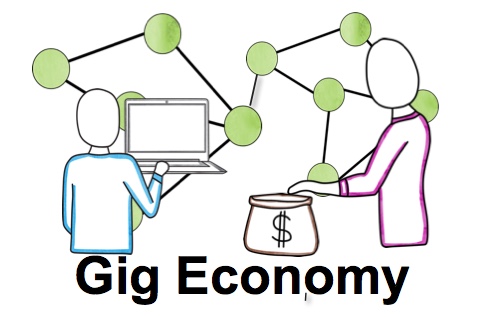
What is the Gig Economy?
The Gig Economy refers to transactions that take place between independent contractors (freelancers) and clients, generally arranged through websites which provide marketplaces for freelancers to find work and where customers can find freelancers. These sites bring people who need work and workers together to perform tasks, or “gigs.”
What is a gig?
A gig is a task for which a person is hired. This concept isn't new; people have worked as freelancers on assignments, and when completed, the worker and client go their separate ways.
Some gigs are very short term, such as an assignment to write an article or to assemble some furniture. Other gigs can be several months or longer in duration, such as developing a mobile application. The work for a gig can take place on-site or remotely and there's no one particular occupation. The ability to define when the assignment is complete that make the work a gig.
What is a gig worker?
A gig worker is different from an employee; the worker is paid for a task or assignment and isn't on the payroll. They're aren't any benefits, and the income is a gross amount, with no deductions. The gig worker, like any independent contractor, is responsible for their expenses. So if a gig worker is an independent contractor, why aren't they known as independent contractors instead? Let's see how technology has caused this change.
How technology changed freelance work
The concept of hiring someone for a particular assignment isn't new. People have hired contractors, businesses have hired freelancers, and organizations have outsourced work to organizations. Hiring people to do work as a contractor instead of an employee is an essential part of the economy. So why call it the gig economy?
Websites and mobile applications have made it easier and simpler to locate and hire people for tasks and make it easier for anyone looking to hire someone for a task to find a worker. These websites and mobile apps create a database of people, their skills, rates, and customer reviews, the ability to hire a worker for a task has become as easy as searching on the Internet. Let's look at some examples.
You've probably heard of the ride services Uber and Lyft. These organizations make it easier for people who need a ride to locate someone to give one by using smartphone technology. Use the app as a customer, and you can request a ride and an available driver contacts you through the app to let you know they're on the way. The driver finds work by registering as a driver with through the app and submitting any necessary paperwork.
At the end of a ride, the passenger's credit card is charged, and the driver is paid through the app. No money changes hands between the passenger and the driver, which is a service provided by the app. No haggling, no negotiation, no carrying cash, and no worrying about being paid if you're a gig worker.
Another gig economy service is Upwork, the largest freelance marketplace on the Internet where freelancers earn over $1 Billion a year. Upwork was created by the merger of two popular freelance websites, Elance and oDesk and tends to focus on tasks that can be performed remotely, such as article writing and website design. Upwork is a marketplace where freelancers can list their skills and portfolio of work and see gigs that are available. Clients can post a gig, search for a resource with special capabilities, and contract for the work directly through the website or mobile app. Like Uber or Lyft, the work is for a task; Upwork handles the payment between the buyer and seller, and the work is submitted and completed online through the website.
To my way of thinking
The gig economy offers workers and customers flexibility, with the ability to find someone to perform a task faster than ever. There are dozens of gig economy websites that bring buyers and sellers together, and many specialize in areas such as pet sitting, home repair, and tutoring, with others popping up all the time.
For more information on gig economy websites and apps, along with ways to make money or hire workers, visit the Freelancing section of my website which has an extensive list of websites where you can earn money and find resources, whether you're a client or a worker.
Not a subscriber? Don't miss a single issue: