
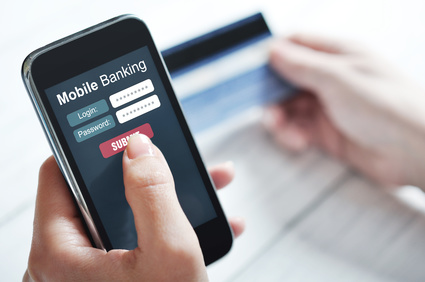
What is Online Banking?
Online Banking (OLB) is a service that provides an account holder access to all of his/her accounts over the Internet. Some common functions available through online banking include viewing your account balance, printing statements, transferring money between accounts, paying bills and making deposits. Almost every bank, credit union, stock brokerage, insurance agency or other financial institution support online banking through a website or a mobile app. Some banks function as online banks only and don't even have a physical facility.
History of online banking
Online banking started in the early 1980's when four large New York-based banks (Citibank, Chase Manhattan, Chemical, and Manufacturers) started offering home banking services using a videotext telephone handset. Remember, in the early 1980's the Internet wasn't commonly available, and the personal computer had just been invented. Phone companies invented a special telephone handset that allowed phone and data communications and provided a small text display.
You don't see many videotext terminals around except in technology museums, and they were an early attempt to move technology into the home that was replaced by personal computers and the Internet. Consumer models of personal computers and new web browser technology of the late 1990's ushered in the era of website-based online banking. Banks and other financial institutions quickly created websites for customers to use their personal computer to access their financial accounts from home or work.
Online banking security and safety
Users of online banking services are required to create an account with a username and password to access their financial information and conduct transactions. Banks and financial institutions usually have the highest security requirements for creating accounts and often require stronger user information for safety and security.
Most commonly, an online banking account will require a complex password that includes a minimum of eight characters and has to include upper and lower case character, numbers, and special symbols. While often frustrating to remember, these requirements make password theft more difficult and exist to protect you. There are other measures as well.
Account holders are often required to create password recovery information, usually in the form of answering one or more questions with personal information that a thief is unlikely to know. These types of questions can be the name of the street where you grew up, your favorite teacher in school, the name of your first pet, etc.. These bits of personal information are for security.
Take the time to fill out these questions since they are used to “challenge” anyone who attempts to access your account with an incorrect password entry. In fact, if you make a mistake entering your password more that a few times, you might be required to answer one of more of these “challenge” questions. Don't worry, if you forget your password or can't login, your financial institution can help you with phone support. However, they will require some information from you over the phone to verify your identity.
Your bank or financial service will never send you an email asking you for information about your account. Any request for information about financial information that arrives in your inbox should be treated as fraudulent. I recommend being on the cautious side and if you're unsure, call or visit your bank or financial institution. For all the transactions that take place, online banking is pretty safe, especially for the commonly used services like bill payment.
Services available
You can do a couple of different financial tasks with online banking such as check your account balances, transferring funds in and out of accounts, pay bills, set account balance alerts for a withdrawal over a certain dollar amount and chat online real-time with a personal banker.
Online bill payment is one of the most commonly used services and most banks allow you to connect your online account with a utility or other credit card so you can pay bills electronically often as soon as the next day. When without an electronic connection, your online bill payment service through your bank will let you send a paper check to whomever you want to send money.
It's even possible to connect financial accounts from other banks and financial institutions (referred to as external accounts) to your online banking account, enabling you to transfer money from one bank to another bank. You should review your banks specific instructions for doing this to set it up since easy one is a little different. It's common for your bank to make a small deposit to the external account and require you to verify the amount of the deposit to complete the electronic connection and enable you to transfer money, but once it's done it doesn't need to be repeated.
Mobile online banking
Smartphones added the ability for people to access their online banking services through their mobile devices, and with cellular service almost everywhere, your bank account is available to you 24 hours a day wherever you can access the Internet. Smartphone technology resulted in banks creating apps for mobile phones, making it easy to access and use your account using a touchscreen device without a mouse and keyboard. And then they figured out how to use the camera on the smartphone.
Since smartphones have a camera, banks figured out how to use the phone camera to take a picture of a check, making online deposits possible from your smartphone. Most bank apps have this capability already, and you can access it by using the check deposit feature of the banking app. Using the check deposit feature will open up a new screen instructing you to take a picture of the front and back of a check, and then enter the amount and complete the deposit. The app usually has instructions for how to line up and position your check. Smartphone cameras are such high quality that the image of the check you send your bank via that app are often higher quality than the scanned image from the teller scanning machine.
The future of online banking
Online banking and the ability of people to use technology such as smartphones for financial transactions is changing the way banks and financial institutions operate, and other organizations as well, like the post office.
Online banking and email billing have resulted in huge reductions of first class mail because fewer bills and fewer checks are mailed. New organizations that allow electronic transactions via email, the web, and apps are becoming more common. PayPal is one of the most commonly known and has allowed people to send and receive money via email for some time. Another one you might see is Square.
Square started out as a way for businesses to accept credit cards but also has an app called Square Cash that allows you to send money to anyone using a mobile app and doesn't require a fee. Square Cash makes it easy to split dinner bills instantly and send money electronically regardless of time zone and location.
With the prevalence of mobile devices and online banking, electronic banking is now a mainstream Internet function and here to stay.