
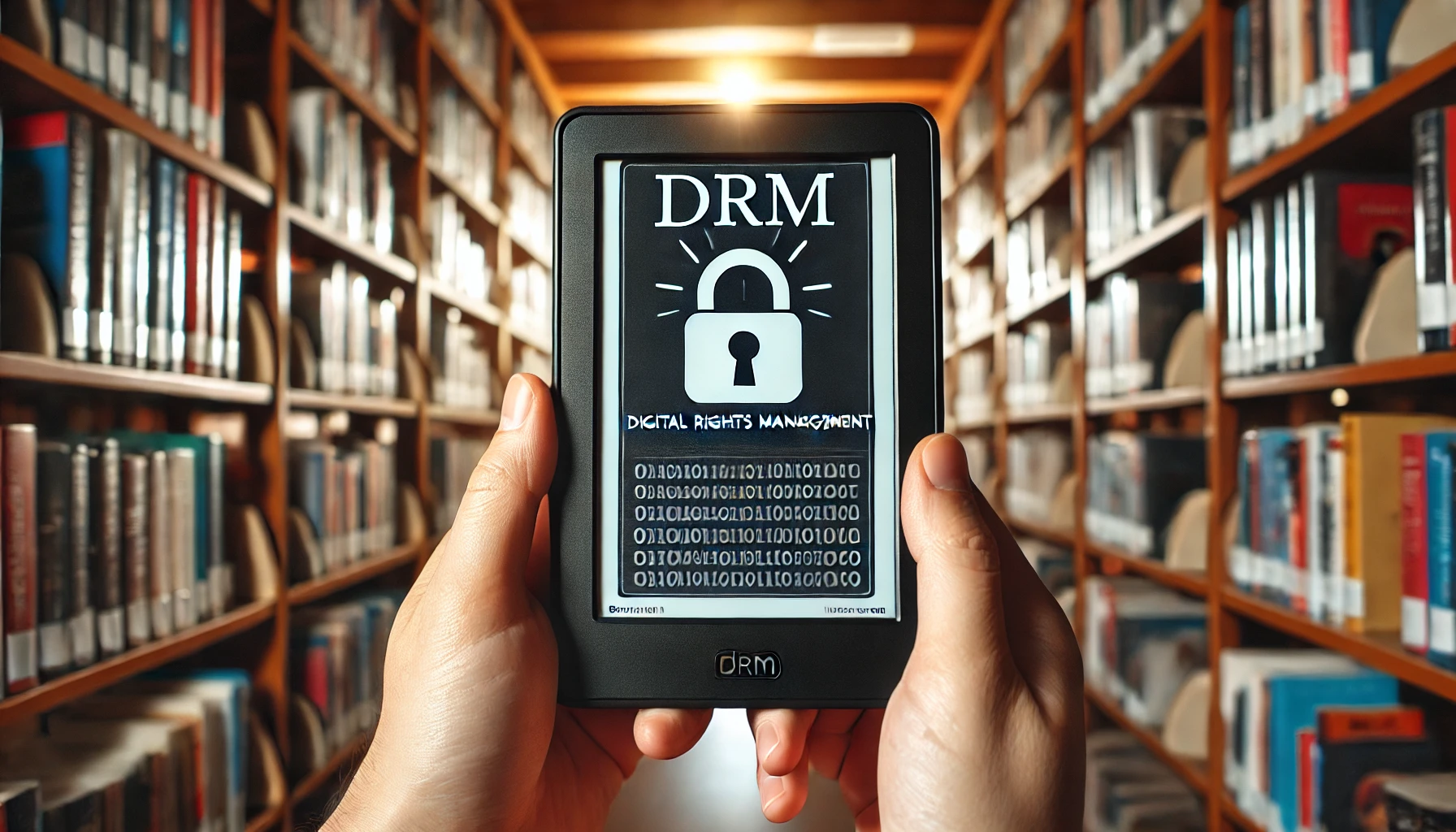
What is Digital Rights Management (DRM)?
Have you ever downloaded an eBook from Amazon Kindle or borrowed one from a library app like Libby, only to realize you can't share it with a friend or move it to a different device? That's because of Digital Rights Management (DRM), a technology designed to control how digital content is used.
What is DRM?
DRM is a form of protection used by publishers and companies to prevent unauthorized copying, sharing, and modification of digital files. It applies to ebooks, music, movies, and even software. Think of DRM as a digital lock that ensures only authorized users can access content in specific ways.
How DRM Affects Your eBooks
If you've purchased or borrowed an ebook, here's how DRM might impact your experience:
- Device Restrictions: Some ebooks can only be read on specific devices or apps. A Kindle book, for example, may not open in other reading apps like Apple Books or Google Play Books.
- Limited Sharing: Unlike a physical book, you often can't lend or give your DRM-protected ebook to someone else.
- Temporary Access for Library Books: DRM enforces a time limit for borrowing an ebook from Libby or another library app. Once your borrowing period ends, the book disappears from your device.
- No Modifications: Some DRM-protected ebooks prevent you from changing the font, adjusting formatting, or printing pages.
Why Do Publishers Use DRM?
Publishers argue that DRM helps:
- Prevent piracy: By controlling access, DRM reduces unauthorized sharing and copying.
- Maintain revenue: Without DRM, some fear people would freely distribute copies, reducing sales.
- Offer time-limited content: Libraries and subscription services rely on DRM to manage borrowing and rental periods.
Criticisms of DRM
While DRM protects publishers, it can be frustrating for users:
- You don't truly "own" the content: Even if you buy a Kindle book, Amazon can revoke access or remove it from your library if policies change.
- DRM limits how you use content. It prevents you from moving ebooks between devices, making long-term access uncertain.
- Accessibility challenges: People with disabilities may struggle to use DRM-protected content if it limits assistive technologies like text-to-speech.
Alternatives to DRM
Some publishers are shifting away from strict DRM. Alternatives include:
- Watermarking: This method embeds a buyer's information into the ebook, discouraging unauthorized sharing without restricting usage.
- DRM-free ebooks: Some authors and platforms, like Smashwords, offer ebooks without restrictions, giving readers more control.
Wrap-Up
Before getting an ebook, check if it has DRM restrictions. Some publishers note this in the product description. If you prefer complete book control, look for DRM-free options from independent stores or publishers that allow flexible use.
DRM continues to be controversial, balancing copyright protection with consumer rights. Understanding how it works can help you make informed decisions about purchasing or borrowing digital content.
FREE MEMBERSHIP NOW AVAILABLE
Join my new Tech Explorer Community for weekly Tech Topics, AI Topics, Q&A, and more.