
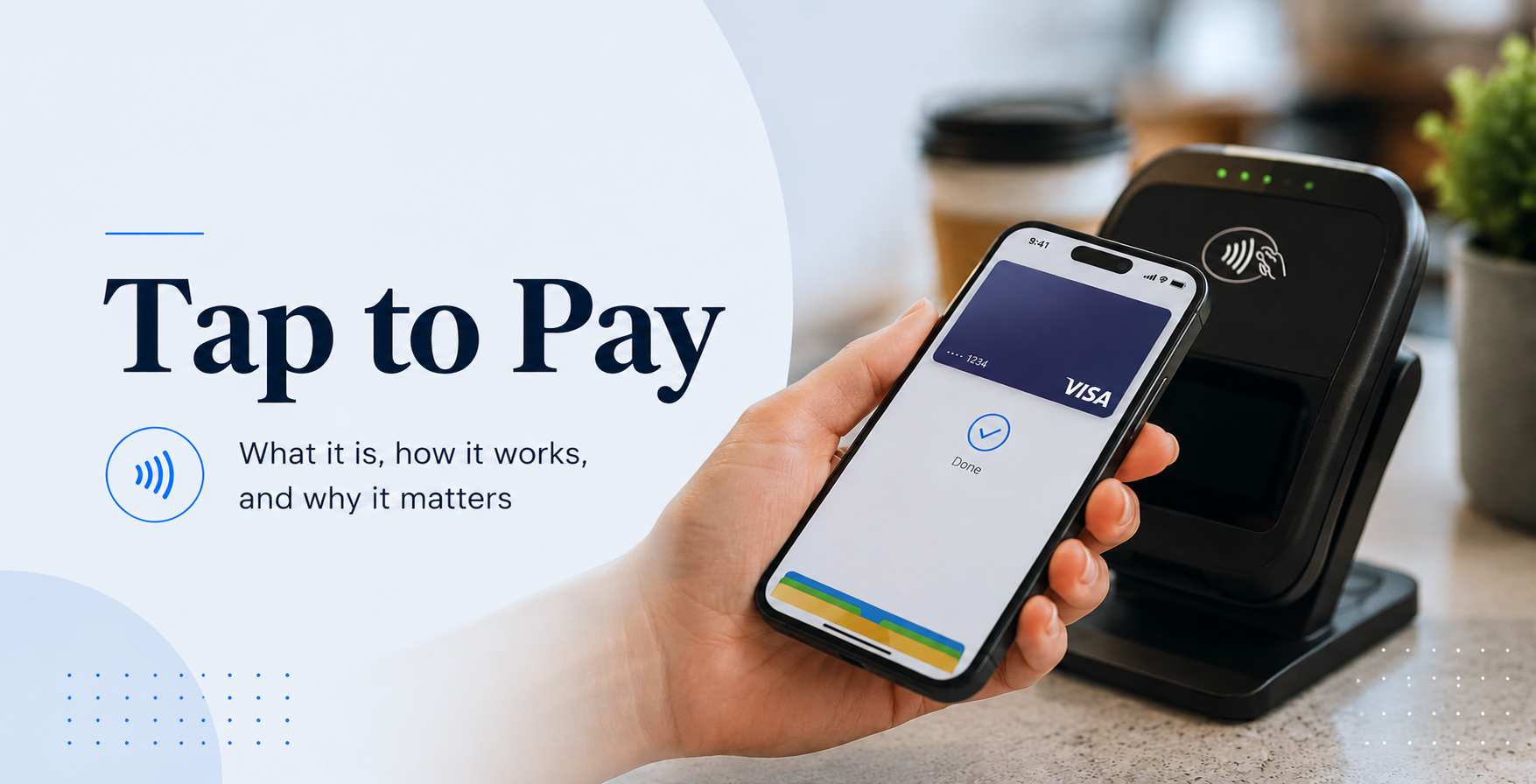
Tap to Pay: What Happens When You Hold Your Phone Near the Register?
Not long ago, paying for something usually meant handing over cash, swiping a credit card, or inserting a chip card into a payment terminal.
Today, many people simply hold their credit card, smartphone, or smartwatch near the register and hear a quick beep. A second later, the payment is approved.
It may seem almost magical.
A fascinating technology operates behind the scenes whenever you tap. You don't need specialized computer expertise to understand how it works.
What Is Tap to Pay?
Tap to Pay is a payment method that lets you make purchases by holding a contactless credit or debit card, or a smartphone or smartwatch, close to a payment terminal.
The technology behind it is called Near Field Communication (NFC).
NFC lets two devices within an inch or two of each other exchange information wirelessly. It's like a short conversation between your card or phone and the payment terminal.
Unlike Wi-Fi or Bluetooth, which can work across a room, NFC only works at very short distances. This limited range helps prevent unauthorized access, making it one of the main reasons Tap to Pay is considered secure.
The Amazing Part: Your Card Doesn't Need a Battery
A surprising fact about Tap to Pay is that the card itself doesn't contain a battery.
Some people think the card must hide a battery, but it does not.
Inside is a chip and antenna. Near the terminal, an electromagnetic field powers the chip.
That energy briefly powers the chip inside the card.
It's like wireless charging but smaller. The card powers up, exchanges info, and pays.
The entire process takes less than a second.
When the card moves away, it loses power and goes dormant. Tap cards last for years without charging.
It's a clever design. The card remains inactive until it's near a payment terminal.
What Happens When You Tap?
Picture yourself buying a coffee.
You hold your card or phone near the payment terminal.
In a fraction of a second:
-
The terminal detects your card or device.
-
A secure connection is created.
-
Payment information is exchanged.
-
Your bank verifies the transaction.
-
Approval is sent back.
-
You hear a beep or see a confirmation message.
All of this happens in just a second or two.
Though it may seem simple, a lot happens behind the scenes.
When Your Real Card Number Isn't Usually Shared
Modern mobile payments don't send your real card number to the store.
With services like Apple Pay, the system creates a unique substitute number called a token.
A token serves as a temporary substitute for your real card number.
The store receives only the token, not your real card info. Even if this token is intercepted, it cannot be reused or reveal your actual card number, protecting your information.
This tokenization adds security, keeping your real card number private during the transaction.
Tap-to-Pay Cards vs. Smartphones
Contactless cards and smartphones use similar technology, though smartphones may add extra security.
Before making a payment, your phone may require:
-
Face recognition
-
Fingerprint verification
-
A passcode
This means someone who finds your phone can't easily make purchases.
With a card, you may not need these extra steps, which is why some experts view phone and watch payments as even safer.
How Someone Might Use It
Imagine Sarah stopping at her local grocery store.
Instead of digging through her purse for a wallet, she unlocks her phone with Face ID, holds it near the payment terminal, and hears a confirmation tone.
The transaction is complete in seconds.
Her card number was never shared, and she didn't have to hand it over.
For Sarah, it was convenient and had multiple security protections.
What If My Phone Isn't Connected to the Internet?
Many people assume their phone must be connected to Wi-Fi or cellular service for Tap to Pay to work.
Often, that's not the case.
The terminal communicates with the payment network and the bank. Payments work even if your phone isn't online.
Is Tap to Pay Safe?
No technology is perfect, but Tap to Pay is designed with several safety features.
Security features include:
-
Encrypted communication
-
Short-range transmission
-
Tokenization
-
Fraud monitoring by financial institutions
-
Device authentication through fingerprints, facial recognition, or passcodes
Tap to Pay is safer than magnetic stripe cards because it uses encryption, tokenization, and dynamic data to secure transactions.
Why It Matters
Technology works best when it quietly makes life easier for users.
Tap to Pay is fast and includes security protections not found in older methods.
When you tap, your card draws power from the terminal, and a phone or smartwatch uses its battery.
Devices create a secure connection and verify the transaction almost instantly. The simple tap is a secure process.
The Bottom Line
A simple tap combines engineering, wireless communication, and security technology.
Your card doesn't need a battery. Your phone uses built-in features. Payment happens almost instantly.
Most take it for granted: a fast, convenient, secure way to pay.
Frequently Asked Questions
If my card has a computer chip, why doesn't it need a battery?
The payment terminal provides a small amount of wireless power when the card is held near it. That power wakes up the chip long enough to complete the transaction.
Can someone steal my card information from across the room?
No. Tap to Pay works only over a very short distance, usually an inch or two. The card must be very close to the payment terminal to communicate with it.
Is Tap to Pay safer than swiping my card?
In many cases, yes. Tap to Pay uses modern security features such as encryption and tokenization, and mobile wallets often add fingerprint or facial recognition for additional protection.